

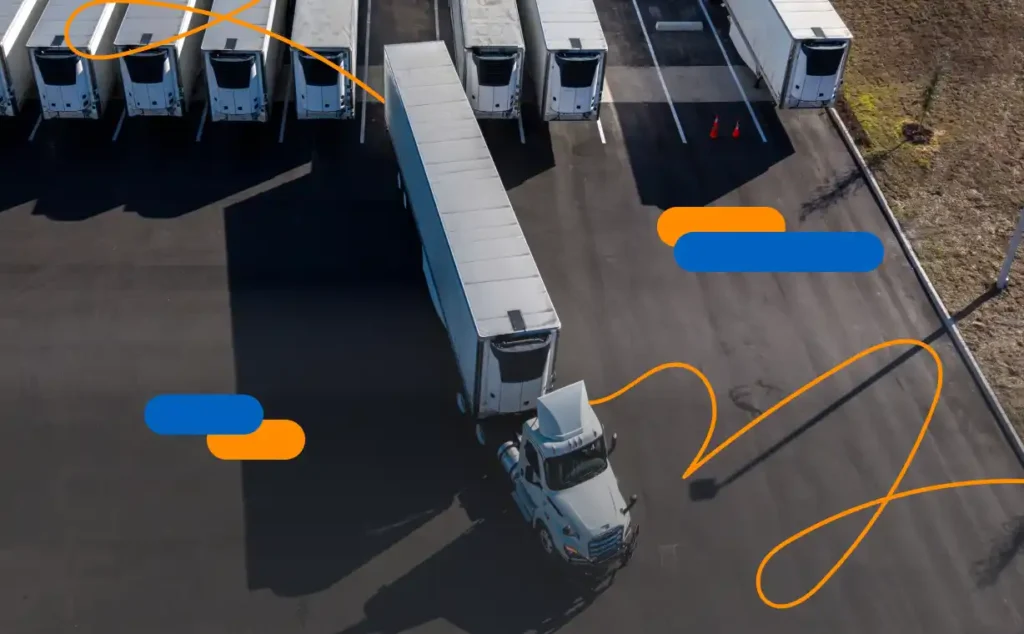
In the day-to-day running of the logistics and transport sector, documentation is one of the main problems faced: delivery notes that go missing, consignment notes damaged in transit, delays, late invoicing… In short, this documentation backlog has a critical impact on cash flow and causes significant internal disorganisation that affects even large companies. This is particularly true when it comes to documents such as CMRs, delivery notes and ADRs.
A clear example of this is Grupo Puma, a group of several leading companies in the manufacture and distribution of building materials, with over 40 years’ consolidated experience. However, despite its market leadership, its day-to-day operations were also vulnerable to such scenarios, demonstrating that excessive paperwork can become an invisible obstacle for any large corporation.
Today we’ll explain how companies in the transport sector can benefit from integrating electronic signatures with CMR forms, and how digitising documents, delivery notes and other paperwork can bring about a major transformation for your organisation. We’ll also illustrate this with one of our sector-specific success stories: Grupo Puma.
What is the CMR document in the transport sector?
The CMR document (or International Consignment Note) is a mandatory standard form used in the international carriage of goods by road between countries that are party to the 1956 Geneva Convention. If you are unfamiliar with this term, it marked a turning point in the regulation of international road haulage, as it established the main guidelines to be followed.
What information does the CMR document contain?
The document consists of 24 boxes, detailing crucial information such as the details of the consignor, carrier and consignee, the place of loading and/or unloading, as well as the specific characteristics of the goods being transported. In total, the document comprises three to four paper copies (for the consignor, consignee, carrier and control).
However, continuing to rely on paper when we are already more than a quarter of the way through the 21st century is an administrative burden you should not have to bear. Lost documents, illegible signatures and disputes over the condition of the goods are very common incidents that can lead to serious problems.
eCMR and electronic signatures for the last mile
Although some companies still use International Consignment Notes, it is becoming increasingly common (and necessary) to use the electronic version (eCMR), which goes hand in hand with electronic signatures. In fact, taking this decisive step is no longer merely a recommendation but has become a regulatory requirement: the digital consignment note will soon be mandatory in the transport sector with the entry into force of Law 9/2025 on Sustainable Mobility. For companies in the sector, going digital means direct cost savings and time optimisation, whilst ensuring strict compliance with the law in the short term.
But what is the point of having a digital document if it lacks full legal guarantees proving who, when and where the goods were delivered? The electronic signature is the key piece in this puzzle. By integrating electronic signatures with the CMR, the eCRM ceases to be a simple PDF document and becomes a secure digital contract, allowing the traditional physical stamp to be replaced by tamper-proof digital evidence.
Viafirma as a legal and technological solution for the transport sector
Within the transport sector, Viafirma stands out as a technological partner for connecting management systems with the reality of the road. Its digital solutions offer flexibility, even allowing signatures to be made without an internet connection, whilst securely storing electronic evidence and synchronising it automatically.
Advantages of integrating electronic signatures with the CMR
The move towards a digital system is not merely a matter of sustainability; it is a strategic decision with immediate benefits:
- Immediate processing of the invoicing cycle: When the administration department uses the traditional method, the carrier must return the physical, signed CMR. In contrast, by incorporating electronic signatures, the consignee can easily sign the document on a tablet or smartphone screen, and it is sent directly to head office immediately.
- Legal certainty and fewer disputes: The electronic signature captures critical electronic evidence such as the exact geolocation of the delivery point and the precise date and time.
- Operational savings and greater efficiency: Significant costs associated with printing, filing in physical folders and unnecessary risks such as the loss of CMR documents in transit are eliminated.
- Sustainability and associated cost savings: Managing documentation digitally eliminates the need for paper, as well as the associated archiving and administrative costs.
- Strict legal compliance: The e-CMR is legally valid during transport inspections throughout the European Union.
Success Story: How Grupo Puma digitised documents in the transport sector with Viafirma
Grupo Puma is a leading group of companies specialising in the manufacture and distribution of building materials. With a history spanning more than 40 years, it stands out for offering a wide range of exceptional products of recognised quality, which has led it to establish 37 production and distribution centres across Europe, Africa, the Americas and Asia. In fact, its production capacity has made it Spain’s largest manufacturer of mortar.
Grupo Puma’s challenge: an excess of physical documentation
In a company of Grupo Puma’s size, the volume of physical documentation generated daily is immense, and this can often lead to administrative and logistical chaos that disrupts employees’ day-to-day operations. Illegible signatures, lost documents, hours spent searching for a specific document… and even the physical space required to store the paperwork ends up being insufficient.
Essentially, there was a major structural problem that needed to be addressed quickly: the excess of physical paperwork.
The solution: How Grupo Puma placed its trust in Viafirma
After analysing the shortcomings they encountered on a daily basis within their work system, they reached the following conclusion: they needed to digitise their documentation. In Viafirma, they found a partner that adapts to their needs, at a highly competitive price, whilst guaranteeing the support and commitment of the Viafirma team.
Prior to implementation, all Grupo Puma employees and departments interested in using Viafirma received training on how to use the tool. This was a crucial phase, given that the transport sector is by no means digitised. And although the integration of our solutions represented a drastic change from the way they had worked for a long time, placing their trust in Viafirma marked a turning point for Grupo Puma.
Grupo Puma’s results following the integration of Viafirma
Thanks to this integration, Grupo Puma has achieved significant improvements in its day-to-day operations:
- Improved traceability of documentation, as they can track the signing status of essential documents such as CMRs, ADRs and delivery notes at all times
- They have considerably reduced paper consumption by no longer having to handle paper. Consequently, they have also reduced paper-related processes: printing, scanning and filing.
- Digitisation of critical documents in their day-to-day operations: consignment notes (CMR), delivery notes and ADR forms.
- Far fewer print jobs, as they no longer require as much hardware
Types of electronic signature for the transport sector
Many organisations use one or more digital certificates as part of their workflow. This makes document management and signing a much more streamlined, convenient and rapid process. However, using digital certificates in the transport sector is not a viable option because you cannot expect a loading bay operator to have a digital certificate installed on their computer.
However, there are other options that can provide an excellent solution, integrated into Viafirma’s products:
- OTP (One-Time Password) Signature: The recipient of the goods receives a single-use code via text message or email, which they must confirm to validate receipt of the goods.
- Biometric Signature: This is the option used in scenarios where the recipient must sign on a touchscreen using their own finger or a stylus, capturing metadata from the signature stroke.
It captures the customer’s consent without any administrative hassle
As you have seen, any sector can benefit from the countless advantages offered by electronic signatures, including the transport sector. At Viafirma, we support your company in taking the definitive step towards document digitisation, guiding you through the process of integrating electronic signatures with the CMR with the highest guarantees of satisfaction.
Are you considering digitising your company’s logistics documentation? Don’t wait any longer. Companies such as Grupo Puma have already put their trust in Viafirma, providing a much smoother user experience for everyone involved in the process of transporting and delivering goods. Don’t wait any longer. Contact us today to digitise your CMRs and speed up your company’s invoicing process. With Viafirma, you can obtain the customer’s approval right at the lorry, quickly, intuitively and without any administrative hassle.
Información relacionada
Digital contracts of carriage
Optimize the supply chain with digital transport contracts

Goods Receipt and Delivery
Goods receipt and delivery with digital delivery note

How to boost sustainability in retail
Driving sustainability in retail with digitization