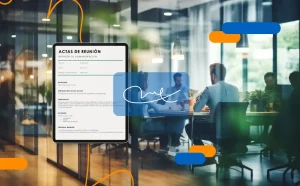

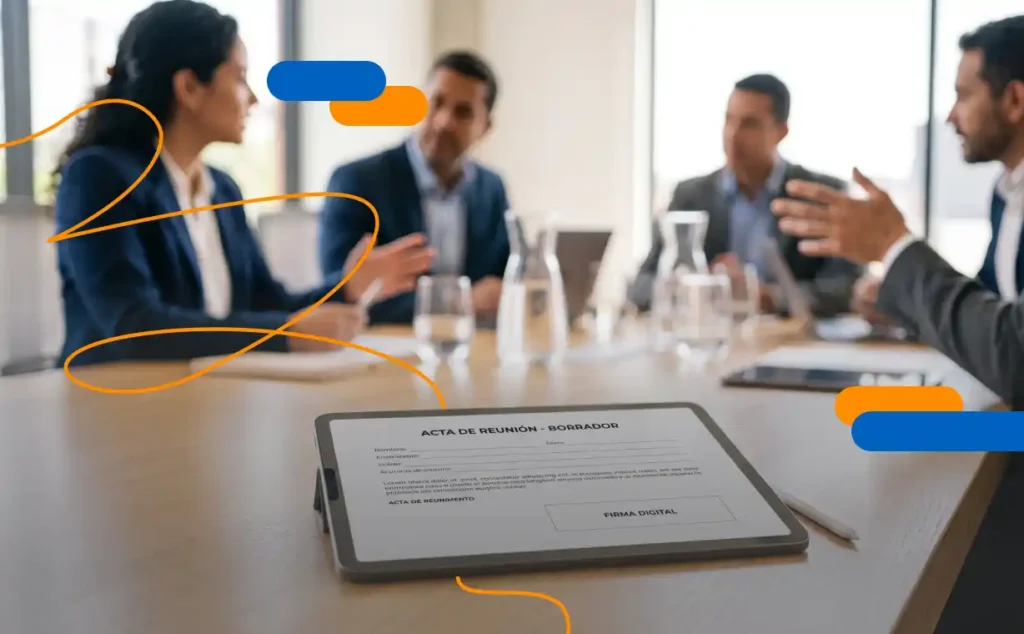
The most important board meeting or committee meeting of the year has come to an end. The strategic decisions have already been made, but now the real administrative nightmare begins: coordinating other people’s diaries, printing documents and chasing signatures against the clock.
This translates into serious problems that can affect the productivity of any organisation: a significant loss of time, a lack of security when managing documents, and the ever-present risk that signatures may be declared invalid.
Now, the question is: Is it possible to address this hidden problem when managing digital minutes in collegiate bodies? Yes, by incorporating the right technology. Electronic signatures transform a process that can take weeks into one that takes a matter of minutes, whilst retaining full legal validity.
Collegial body: What it is and how its signature system works
A collegial body is a structure comprising three or more people who meet to deliberate, make decisions or provide advice collectively. Examples of collegial bodies include boards of directors, an academic committee or the board of trustees of a foundation. Although these three are quite different, they all share the same central characteristic: they are composed of multiple members.
Thus, the minutes of a meeting require:
- A quorum and majorities
- A chronological order
- The mandatory signatures of key roles (formally the Chair and Secretary, or all those present).
However, on many occasions, the minutes of collegiate bodies are ‘sealed’ by the signing of a physical document handed over by the secretary. Although this method has always been used, it is an inefficient system that can become an administrative time bomb.
Is it 100% legal to digitally sign minutes?
Absolutely yes. Signing digital minutes electronically is entirely legal. Viafirma’s tools strictly comply with the eIDAS Regulation, the benchmark legislation governing electronic signatures and trust services.
What does this mean? Among other things, it means that every minutes document for collegiate bodies signed using Viafirma generates an unalterable electronic evidence document (IP address, date and time, OPT codes), guaranteeing its absolute legal validity in any court.
Advantages of electronic signatures in digital minutes
- Unrivalled efficiency: With electronic signatures, you can say goodbye to endless bottlenecks. Signing processes go from taking weeks to being completed in under 24 hours.
- Full traceability: View all the details of the process in real time, from who has signed to who still needs to sign the document. You can also set up automatic reminder alerts.
- Timestamping: Proves that data was created at a specific time and has not been altered since the document was signed.
- Centralised certificate storage: By using Viafirma’s tools, you can store digital certificates in a single location – in the cloud – and access them from any device without the need for installation.
How to manage digital minutes step by step
The most important factor in ensuring that the implementation of a digital workflow runs smoothly and without any surprises is choosing the right technology.
With Viafirma’s digital tools, the process boils down to the following steps:
- Drafting and approval: The secretary or designated person must draft the minutes after the meeting and upload them to the platform. Depending on the situation, they can also create customised templates that can be reused after each event; this will make the process much quicker, as only minor details will need to be amended.
- Configuring the sequential workflow: Set the order of signatures. For example, the secretary may sign first, and only once their signature is confirmed will the chair receive the document and be able to sign it.
- Signature by participants: The remaining users receive the document for their signature. They can do so via their mobile phone, tablet or computer using an OTP code or a digital certificate.
- Closure and generation of the certificate of evidence: The minutes are secured and archived.
Factors to consider when choosing a digital signature platform for collegial bodies
Given the wide range of options available on the market, choosing one over another can be somewhat complicated. For this reason, when selecting a digital signature platform for governing bodies, you should ensure it meets a number of requirements:
- Ease of use: Meetings of governing bodies often fill up diaries, and users are looking for signatures that are quick and can be completed with a single click.
- Ability to set up signature workflows: The ability to tailor the process to your organisation’s rules.
- Integrations with third-party tools: Ensure that the technology you choose complies with eIDAS, the GDPR and high encryption standards.
Ready to secure the minutes of your next meeting?
Are you ready to secure and streamline the minutes of your next board meeting? With every day that passes without you implementing electronic signature solutions, your organisation is losing hours of productivity, wasting valuable resources on courier services and exposing itself to legal risks.
With Viafirma, streamlining red tape and protecting your agreements is easier than ever. Would you like to see how we can help you in your day-to-day operations? Request a free demo with our sales team. The time to take the step towards digitalisation is now.
Related articles