

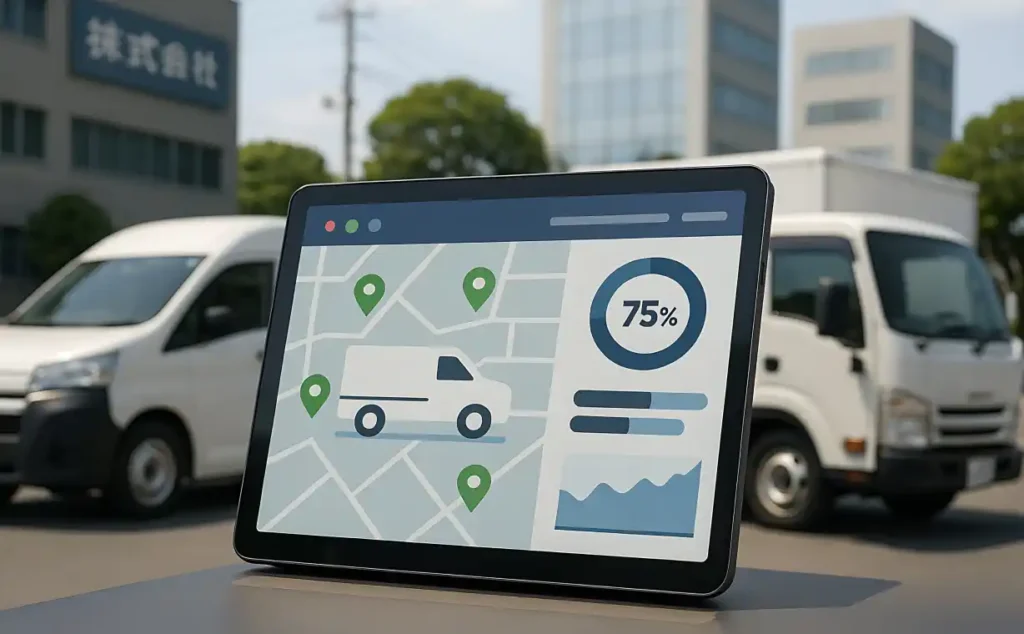
As a haulier or logistics manager, think about all the documents you have had to complete throughout your career to set up or carry out a route: delivery notes, consignment notes, certificates, etc. All these documents, whilst necessary, have generally been handled in paper form, which opens up endless possibilities for the loss of documentation or transcription errors.
However, this situation is set to change in the final quarter of 2026. With the introduction of the mandatory DeCA system, transparency, control and traceability of the transport process will be required. All of this is aimed at improving traceability and safety in transport.
However, the digitalisation of the transport sector need not involve complex steps. In fact, the process is much simpler than it might seem. For this reason, we have put together a short guide with some tips to help you optimise and improve traceability and security in transport and for your freight, protect the relevant documentation, and adapt your logistics operations to comply with the law.
Strategies for improving traceability and safety in transport
One of the most important points that hauliers and logistics companies must bear in mind is that a document may be subject to alterations if what is signed is a physical document. However, as the DeCA is mandatory, it must be managed in a digital environment, and it is important to ensure information security from the outset of the project:
Ensuring the integrity of goods in transit
Thanks to time stamps, digital documents are marked with the exact time and date on which they were signed.
Protecting the digital identity of hauliers and companies
Electronic validation of contractual shippers and hauliers prevents fraud, identity theft and malpractice in the loading and transport of goods.
Digital custody of transport chain documentation
In accordance with the regulations, one of the key features of the DeCA is that files must remain stored in an accessible digital repository for a minimum period of one year. This also protects the information from potential loss.
How to avoid traceability errors that lead to administrative penalties
Despite the requirement to include the DeCA on every route, we know that the implementation of this regulation will not be without errors. And whilst it is understandable that there may be some uncertainty regarding its implementation, professionals in the sector must be aware of the potential penalties and fines they may face if they fail to comply with the DeCA (or do so incorrectly).
Whilst it is highly likely that professionals (meaning both hauliers and those responsible for or in charge of logistics) act in good faith, any missing information may be grounds for a penalty.
Therefore, to avoid setbacks during an inspection and to enhance traceability and safety in transport, it is advisable to:
- Check that the document contains all the mandatory details (origin and destination, goods being transported, responsible company, consignee, etc.). You can view all the details that the DeCA must include via this link.
- Carriers must be able to easily access the digital version of the document from their mobile device (or have a printed copy with a visible QR code).
Viafirma helps transform the traceability of your transport network
Adapting to new regulations can be difficult, but it is even more so when it involves incorporating digital measures, particularly in an ageing sector. This is hardly surprising, given that, according to a report published in 2025 by the International Road Transport Union (IRU), the average age of 50 per cent of Spanish hauliers exceeds 55, compared with an average of 31.6 per cent across the 36 countries analysed in the study. And the older the workforce, the greater the difficulty in using technology, due to a lack of prior training and designs not tailored for use by older people.
To help you implement the DeCA, at Viafirma we offer a wide range of digital solutions that can be incorporated into the daily routine of logistics and transport companies, designed to protect and automate the document lifecycle:
- API integration: Our API can be integrated with logistics management software (ERP/TMS), meaning the PDF document is created immediately.
- Evidential validity and time-stamping: We offer time-stamping and electronic signature services that certify the legal validity and integrity of every document issued.
- Mobility for hauliers: Hauliers can access the control document with its QR code directly on their mobile devices.
Improving traceability and safety in transport is possible with Viafirma
Are you looking to digitise your routes and improve traceability and safety in transport without any major complications, whilst ensuring document traceability and protecting your business from financial and administrative penalties? If so, we’re offering you access to a free, personalised demo of Viafirma’s products, so you can see for yourself whether they meet your team’s needs.
Don’t wait any longer. With Viafirma, complying with the new DeCA regulations is easier than you think.
[acf_posts_relacionados]